

Our guide, 10 Strategies for Sustainable Construction was created as a quick reference to remind construction professionals about good principles that can be incorporated into virtually any project that has sustainability requirements.
Scan the guide for headlines, bring it into the field, or pass it on to a colleague or to a client. If you need more help or an estimate for services you can write to us at .
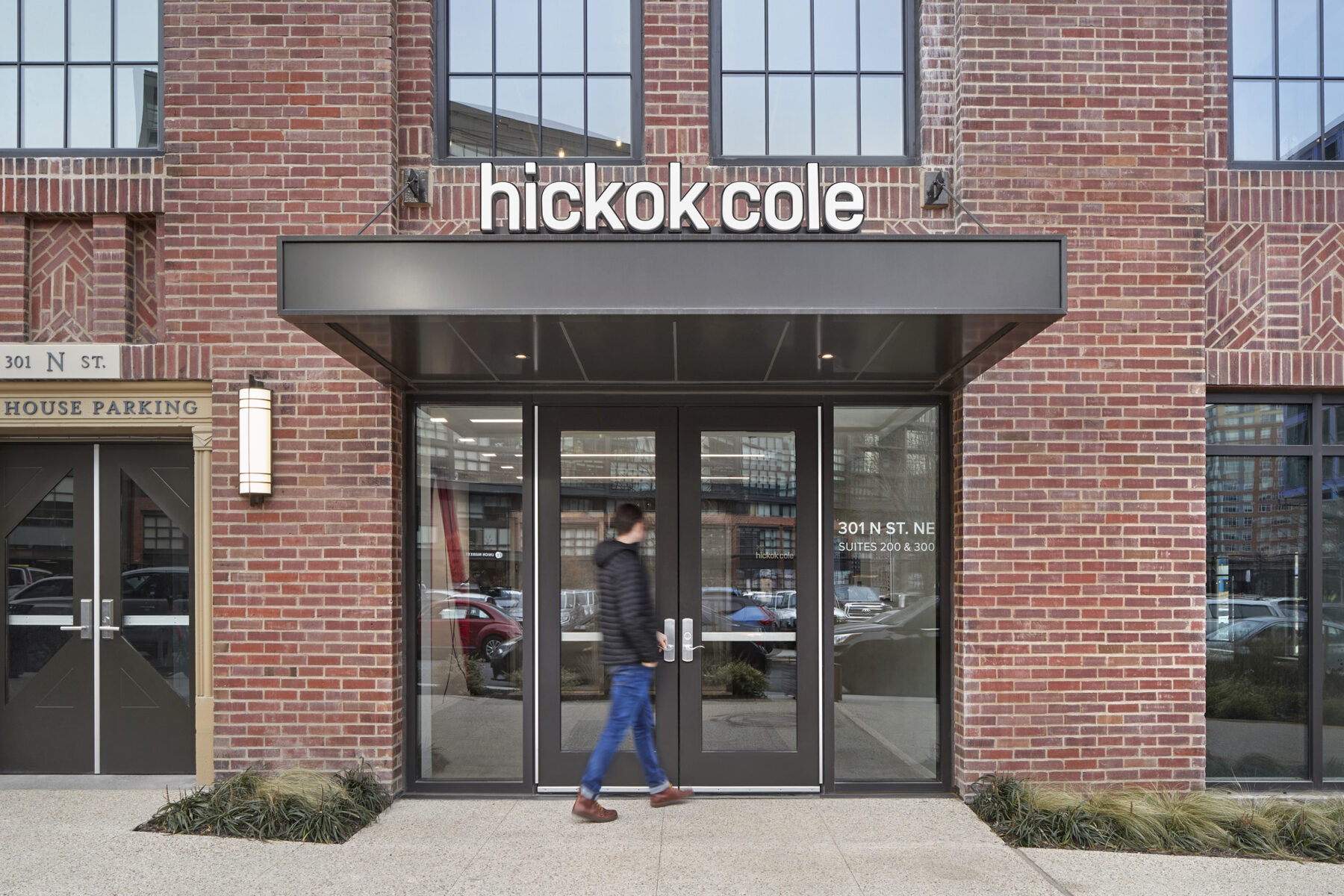
Hickok Cole has relocated its 100-person office to the Union Market neighborhood, leasing office space on the top two floors of the historic Press House building.

Visitors are immediately greeted in a colorful lobby space, reflective of Hickok Cole's creative culture and forward-focused designs.

The office unifies the design studio on one floor in an open-office concept intended to promote collaboration, communication, and connectivity among sectors and services.
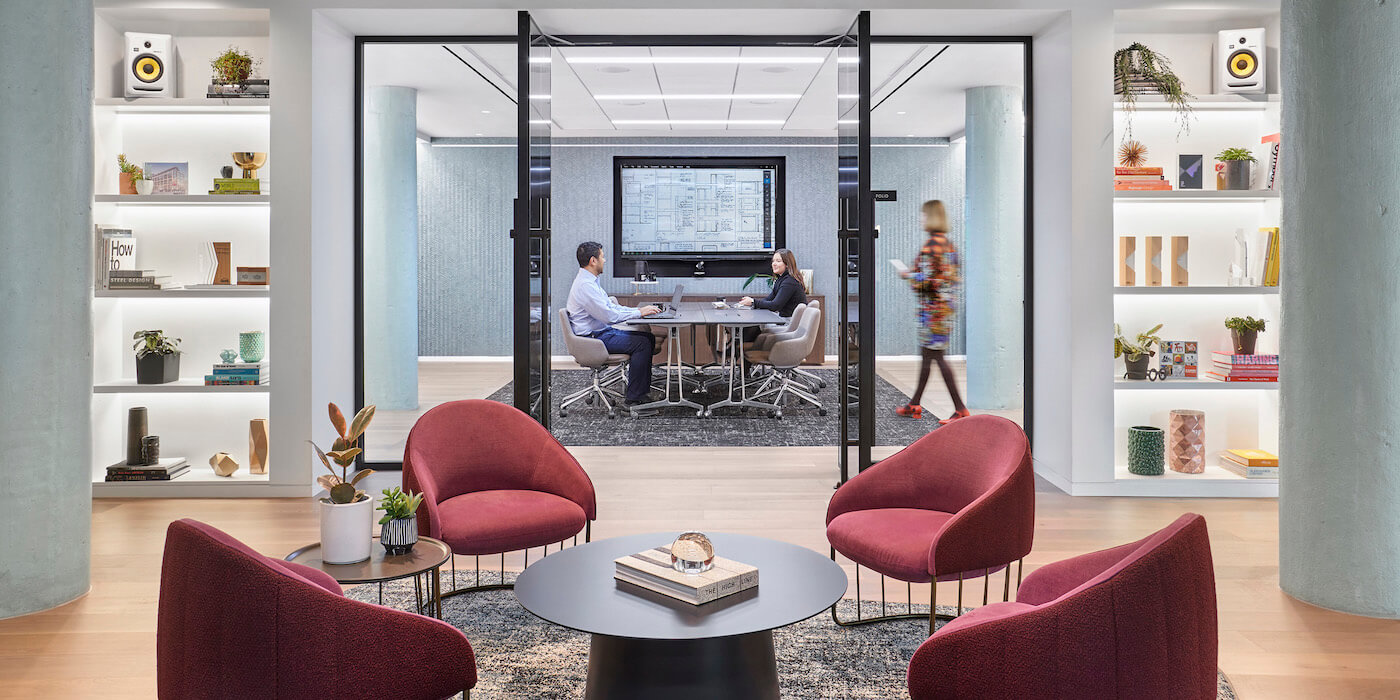
Breakout spaces, conference rooms and a design library offer spaces for internal collaboration and client-facing design meetings.

Above Green worked with Hickok Cole to design their new interior office space to LEED Gold certification.
Learn more about Hickok Cole's new office here.
Looking for support on a project? Get in touch.
July is National Parks and Recreation Month.
Parks are at the center of many people’s experiences and memories, offering a place to gather with family, friends, and community.
Parks are also hubs for history and culture, making it essential to protect and preserve them for future generations.
Recently, we’ve witnessed local and national parks impacted by natural disasters. From wildfires raging throughout Yosemite National Park, to severe flooding in Yellowstone, and historic droughts in Lake Mead and Lake Powell, the damage continues to pose a long road to recovery for people, wildlife, infrastructure, and businesses.
Climate change is the greatest threat to our parks, making it essential to rebuild and proactively develop sustainable buildings and infrastructure.
Sustainable buildings help achieve greater energy efficiency, reduce the consumption of natural resources, and reduce greenhouse gas emissions.
Throughout the years, we’ve been proud to help create sustainable, resilient spaces for individuals and communities to enjoy while protecting our local and national parks like Midtown Park, Franklin Park, and San Juan Island's National Historic Park.
Looking for support on a park project? Get in touch.


Kona Judiciary Complex has been awarded LEED Gold Certification.
Working with Nan, Inc., Above Green provided consulting services to help honor the West Hawaiian land and pay homepage to its surrounding landscape by implementing sustainable features throughout the facility.
Learn more about the Kona Judiciary Complex here.
Looking for support on a project? Get in touch.

Our guide, 10 Strategies for Sustainable Design was created as a reference to help design professionals achieve sustainable building performance.
It lists principles that can be incorporated into virtually any project - taking into account embodied carbon, water and energy usage, material standards and more.
Sustainable design is complex and multi-faceted. Need help with your project?
Contact us for a free consultation.

The non-profit generic drug company works to reduce and prevent drug shortages and price spikes.
We'll be working as LEED Certification Consultants and Commissioning Agents to help them create a sustainable home for their team in Petersburg, Virginia.

The healthy buildings movement is on the rise with no signs of slowing down. Now years into the pandemic, we're seeing more architects and building owners pursuing WELL Certification, which certifies parts of the built environment that have an innate impact on wellbeing and health of humans.
Two of our latest WELL projects include Garfield Elementary School by STUDIOS Architecture and Skidmore, Owings & Merrill (SOM) HQ with Gilbane Building Company, both in Washington, D.C.


Above Green is officially NEBB Certified
This premier international certification verifies us as a top tier firm which delivers high performance building commissioning services.
Looking for support on a project? Get in touch.
Marking our seventh annual company retreat, our team met up in Deep Creek Lake, Maryland to ski, snowboard, and enjoy each other’s company.
Since shifting to a remote work environment, we’ve become more appreciative of being together in person with our retreats becoming important to how we maintain, build, and improve our work culture.
Looking to join us? Check out our available positions.


Top 5 Predictions
5) INCREASED MODULAR BUILDING AND USE OF PREFABRICATED MATERIALS
The modular construction and prefabricated materials market is predicted to balloon in value to $108 billion by 2025, driven by a lack of skilled labor and an increase in cost-cutting technology.
General contractors and owners are also leaning more towards prefabricated methods of construction because it provides flexibility in the structure design.
Unlike traditional materials and building sites where waste goes directly to a landfill, prefabricated materials are recyclable. Demountable partitions allow offices to enhance daylight and insulation for improved energy efficiencies, while reducing the volatile organic compounds (VOC) and air quality concerns associated with traditional drywall and finishing.
4) DEEP ENERGY RETROFITS
New York is breaking new ground with a comprehensive plan to make buildings across the state fully carbon-neutral.
A big part of the plan is retrofitting the millions of existing buildings in the state that were built before there was an energy code in effect. Among the programs to achieve this goal is RetrofitNY, a plan to deliver comprehensive deep energy retrofits to existing buildings that has been in development for more than four years.
As several other states work on exemplifying climate action on a state level, we expect to see others adopting a similar plan.
3) RISING DEMAND FOR ZERO EMISSION TECHNOLOGIES
President Biden's push for a net-zero building portfolio under EO 14057, will put increased focus on zero emissions technology.
Efficient, zero carbon buildings take advantage of available, cost-effective technology to reduce emissions while increasing health, equity and economic prosperity in local communities.
The most commonly used renewable energy technologies are on-site PV panels, solar water heaters, and off-site renewable energy systems, like solar power plants, hydropower plants, and wind turbines. We don’t only anticipate demand to increase - we also predict new technologies will make their way into the market.
2) A CONTINUOUS BOOM IN SMART, SUSTAINABLE CITIES
Smart cities leverage data to optimize energy consumption and manage resources, so it’s no surprise that regenerative buildings are integral to their blueprints for water, waste, and energy management.
The Worldwide Smart Cities Industry is Expected to Exceed $2.5 Trillion by 2026.
Within the U.S., Congresses' $1 trillion bipartisan infrastructure bill aims to create more sustainable, equitable cities.
Priorities within the bill include:
- Upgrading to Clean Energy: A $108 billion investment will help upgrade the nation’s electricity grid, with thousands of miles of new transmission lines and funds for environmentally friendly smart-grid technology.
- Improved access to public transit: The largest-ever federal investment in public transit of $39 billion, has been budgeted to modernize systems and improve access for the elderly and people with disabilities. Lawmakers have also shored up $15 billion for the nation’s first network of electric-vehicle chargers along highway corridors, as well as zero-emission buses and ferries.
- High-Speed Internet Access: $65 billion has been allocated to bolster the country's broadband infrastructure, which will allow for more flexibility of remote work and learning.
Big tech companies like IBM, Microsoft and Cisco, are also investing in smart cities. Despite initial investments required for smart cities, they’ve been proven to positively influence the economy, improve quality of life among residents, and benefit the environment over the long term. Austin, TX, Boston, MA, Boulder, CO, San Jose, CA, and New York City, NY are some of the notable smart cities within the U.S. and we’re expecting to see more cities pursuing sustainable building.
1) COMMERCIAL-TO-RESIDENTIAL CONVERSIONS
The Covid-19 pandemic has changed America’s downtowns, leaving commercial buildings empty.
As of late October of 2021, only 28 percent of Manhattan office workers had returned to their desks, with only 8 percent in office for five days a week. With 80 percent of employers planning to permanently change their remote work policies, empty commercial buildings are ripe for conversion to residential housing.
Green Building Is Warming Up
2021 was a year for reflection and revision on priorities, policies, and portfolios.
ARCHITECTS JOINED WORLD LEADERS IN TALKS ON CLIMATE CHANGE
This year, The American Institute of Architects sent its first delegation to the UN Climate Change Conference, COP26, to raise awareness of the role of the building sector, to connect with decision-makers and partner organizations, and to advocate for policies that support decarbonization and adaptation.
At the 26th conference, nations agreed on the Glasgow Climate Pact, which states that carbon emissions will have to fall by 45 percent by 2030 to keep alive the 1.5°C (2.7°F) goal. This pact called for nations to return in 2022 with new, more ambitious targets to curb emissions.
PRESIDENT BIDEN SIGNED EXECUTIVE ORDER 14057
On December 8, 2021 President Biden signed Executive Order 14057, accelerating the Federal Government’s efforts toward a net-zero building portfolio. Under the policy, all new construction and modernization projects greater than 25,000 square feet must be designed to cut greenhouse gas emissions by 50% by 2032 and achieve net-zero across its portfolio by 2045.
SUSTAINABLE FUNDS HIT A RECORD HIGH
The U.S. sustainable fund landscape surged to a record of nearly $21.5 billion in the first quarter of 2021.

This Year, We've Seen Every Building Can Be a Green Building
With global climate initiatives and federal policies prioritizing a greener future, we've seen a big bump in demand for our services.
In 2021, we've onboarded 70 new projects across 15 states.
OUR NEW PROJECT BREAKOUT

With All This Growth, We've Continued to Up-Skill and Expand Our Team
OUR NEW TEAM MEMBERS

We're hiring for 2022!
Thank you to our clients and employees who have made 2021 the biggest year in our history. We're looking forward to a productive new year!
Renovations to Philadelphia's Second Police District Office have been completed.
Working with Murphy Quigley Company, Above Green provided Sustainability Consulting. We helped plan and prevent construction activity pollution, manage waste during demolition and construction, implement low emitting materials, and test and establish an indoor air quality management plan.
We achieved LEED Gold Certification, exceeding our original LEED Silver target.
Looking for support on a project? Get in touch.

Franklin Park, DC's largest public park, has reopened after a $21 million renovation. The five-acre historic square, originally established in 1832, hadn’t been updated since 1935.
Working as sustainability consultants, Above Green helped transform the green space into a sustainable neighborhood retreat. We implemented a storm water management system that captures 100% of the water runoff from the park, a green roof on the 2,200 square foot restaurant pavilion, and energy efficient features.
Learn more about Franklin Park.
Looking for support on a project? Get in touch.
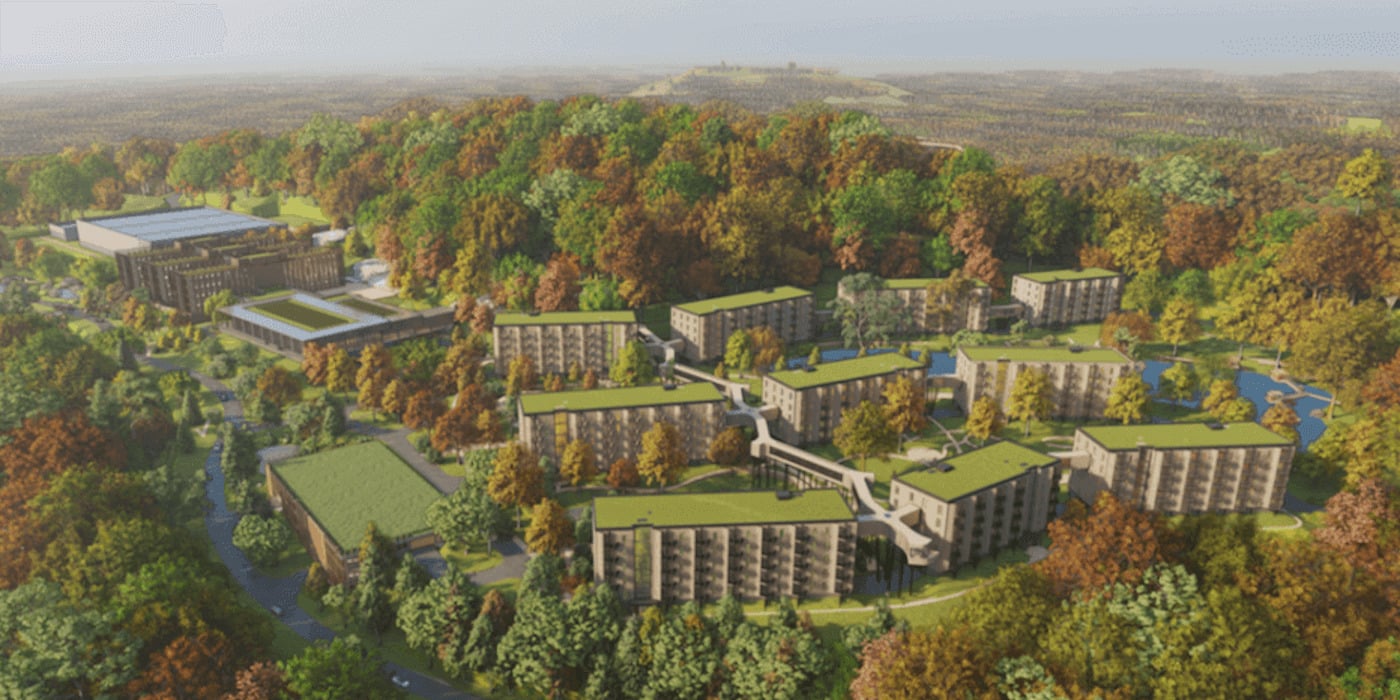
Our latest project with Jehovah’s Witnesses proves that all buildings can be green buildings.
Above Green is providing LEED Consulting Services for the Watchtower Bible and Tract Society of New York, where we’re helping to integrate sustainable design across the multi-building working, living, and worship facility campus.
Learn more about the project here.

Each year, B Lab recognizes top-performing Certified B Corporations around the world.
This year, Above Green was recognized among B Corp's Best For The World: Environment honorees for our planet-friendly practices and sustainability initiatives.
We’re grateful for our ability to contribute to the environmental movement and proud of using our business as a force for good.

If you'd like to use this infographic on your website, you’re welcome to. All we ask is that you give credit to https://abovegreen.com.
As a company that specializes in helping people get their buildings LEED Certified, we are passionate about sustainability and green living. Naturally, we were curious to know which states in the USA are the best and worst for green living.
The above map is showing the results of our research based on 6 key factors: renewable energy usage, carbon emissions, water usage, number of electric vehicles, number of green buildings, number of green building professionals, and air quality. The factors were weighted by importance - for example, air quality counted more than number of electric vehicles.
Let us know what you think and what factors we should include next time!
The Top 5 Best States for Green Living are:
- Alaska
- Montana
- Oregon
- Washington
- Hawaii
The Top 5 Worst States for Green Living are:
- Delaware
- Rhode Island
- Ohio
- Mississippi
- New Jersey
Methodology
1. Renewable Energy
Renewable energy which mostly includes wind and solar is a clear indication of how green a state is. The state with the most renewable energy per capita was Washington and the state with the least was New Jersey.
Data source: https://www.eia.gov/renewable/state/archive/2010/
2. Carbon Emissions
Naturall, a state with a high carbon footprint is not going to be as ideal as a state with low carbon emissions. The state with the lowest carbon emissions per capita was New York and the state with the highest was Wyoming.
Data source: http://www.eia.gov/state/rankings/?sid=US#/series/226
3. Water usage
Water is a precious resource. We wanted to see which states are guzzling the gallons versus which are more careful with their water usage. The state with the highest water usage per capita was California (luckily, their drought has broken!) and the state with the least was Vermont.
Data source: https://pubs.usgs.gov/circ/1405/
4. Electric Vehicles
Electric vehicles are another clear indication of how green conscious a state is. How often do you see a Prius or a Tesla in your neighborhood? The state with the most electric vehicles per capita was California (3.25 per 1000 people) and the state with the lowest was Mississippi (0.07 per 1000 people).
Data source: https://energy.gov/eere/vehicles/fact-876-june-8-2015-plug-electric-vehicle-penetration-state-2014
5. Green Buildings and Professionals
At Above Green we help contractors, architects and developers to get their buildings LEED certified. LEED stands for Leadership in Energy and Environmental Design and is a rating system devised by the United States Green Building Council (USGBC) to evaluate the environmental performance of a building and encourage market transformation towards sustainable design.We looked at the number of LEED certified projects and LEED consulting professionals per state. The state with the most LEED building per capita was Hawaii and the state with the least was West Virginia. The state with the most LEED professionals per capita was Massachusetts and the state with the least was Mississippi.
Data sources: http://www.usgbc.org/projects and http://www.usgbc.org/people
6. Air Quality
Last but not least was air quality. Few can argue that air quality isn’t essential for green living. The state with the best air quality is Hawaii. No real surprises there with 1000s of miles of ocean surrounding the islands (although they do still burn the sugar cane and sometimes vog is an issue caused by their volcanoes!). The state with the worst air quality was Utah. This one is very surprising but is apparently caused by extreme temperature inversions that bring fine particle matter (which is toxic to breathe) down to ground level.
Data source: http://www.usa.com/rank/us--air-quality-index--state-rank.htm
Conclusion
From our findings based on these 6 key factors we found that generally the northern and western states were better for green living. Of course there are many more factors that could be considered for a more complete evaluation. This our first attempt at finding the greenest places. What should we look at next time? What are most important factors in green and healthy living to you?